

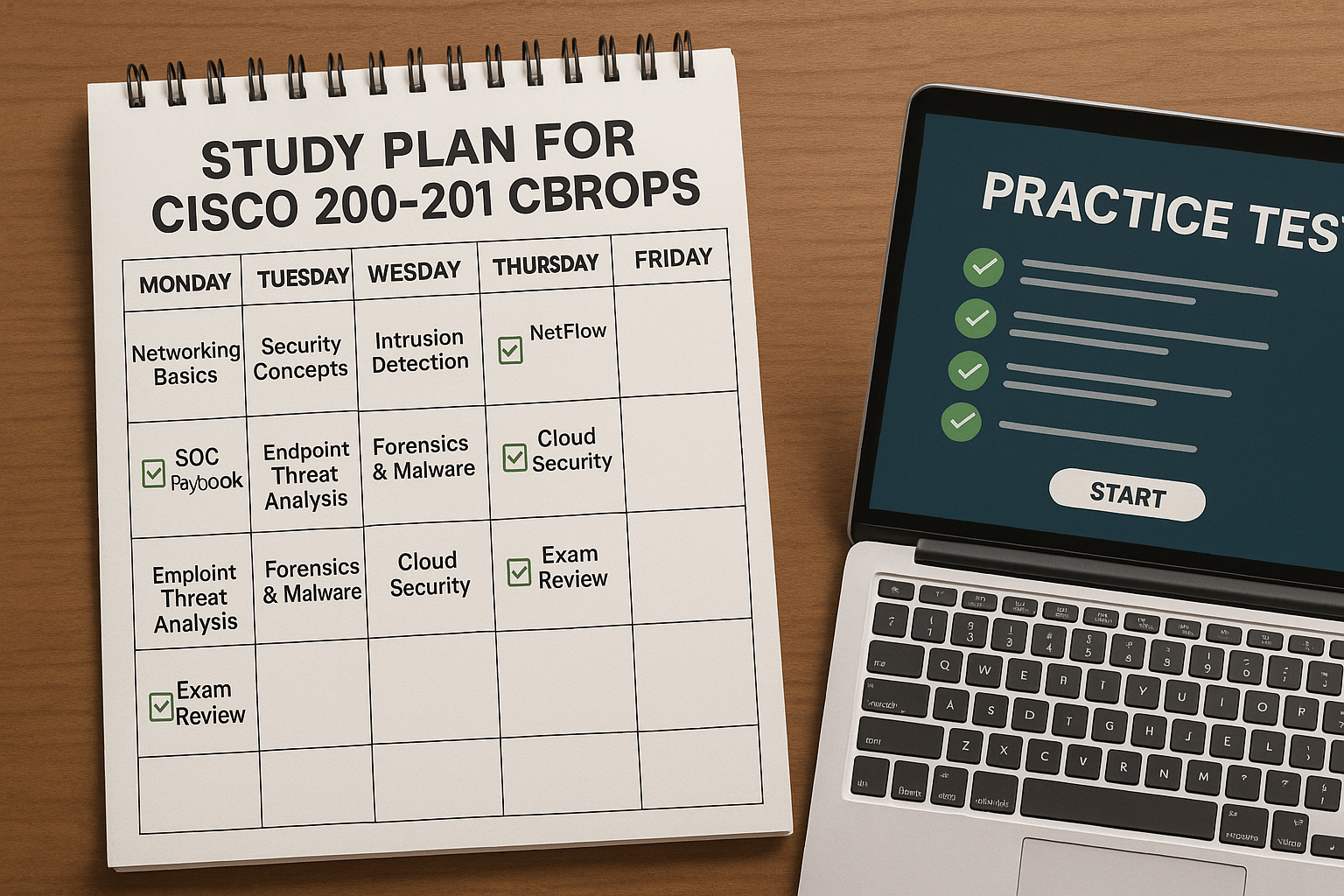
Preparing for the Cisco 200-201 exam often feels overwhelming, especially when you’re trying to balance work, skill gaps, and the pressure of entering cybersecurity. The good news is that the Cisco 200-201 CBROPS exam is far more manageable when you know what to study, how to structure your preparation, and which resources make the biggest difference. This guide takes away the guesswork and gives you a clear, practical roadmap toward exam-day confidence.
Whether you’re transitioning into cybersecurity or strengthening your SOC skill set, this comprehensive preparation guide breaks down the core topics, must-know concepts, proven strategies, and a study plan that simplifies the journey. Use this guide as your blueprint to build confidence, gain clarity, and ultimately crack the Cisco 200-201 exam.
What Makes the Cisco 200-201 CBROPS Exam Unique?
The Cisco 200-201 exam validates foundational cybersecurity operations skills required for entry-level roles such as SOC Analyst 1, Cybersecurity Analyst, and Security Operations Technician. Unlike typical networking exams, CBROPS heavily focuses on detecting threats, analyzing events, understanding attack vectors, and working with security tools used in real SOC environments.
According to the official Cisco exam outline, candidates are tested across domains such as security concepts, network security monitoring, endpoint analysis, incident response, and digital forensics. Because the exam blends theory with applied scenarios, the right preparation must include practical analysis, structured revision, and consistent practice.
Who Should Target the Cisco 200-201 Certification?
This exam is designed for individuals aiming to build or advance a career in cybersecurity. It is especially relevant for:
-
Entry-level security analysts
-
SOC analysts
-
Network engineers transitioning to security
-
IT professionals expanding into cybersecurity fundamentals
-
Students and early-career technologists pursuing threat-detection roles
If you're targeting your first security role, this is a high-ROI certification with strong job market demand and global industry recognition.
Cisco 200-201 Exam Structure at a Glance
Understanding the structure of the exam reduces uncertainty and helps you focus on what matters most.
- Format: Multiple-choice + scenario-based
- Duration: 120 minutes
- Mode: Proctored
- Vendor: Cisco
- Exam Name: Understanding Cisco Cybersecurity Operations Fundamentals (CBROPS)
Domains Covered:
-
Security Concepts
-
Security Monitoring
-
Host-Based Analysis
-
Network Intrusion Analysis
-
Security Policies & Procedures
Each domain includes both theoretical and tool-based concepts, requiring a blend of study and hands-on learning.
Key Concepts You Must Master for the Cisco 200-201 Exam
Below are the core cybersecurity areas you must understand deeply to pass the exam with confidence.
1. Security Concepts
This is the foundation of the entire exam and includes fundamental cybersecurity concepts such as:
-
CIA Triad (Confidentiality, Integrity, Availability)
-
Threat actors and threat vectors
-
Types of attacks: Phishing, DDoS, malware, SQL injection
-
Security controls: Administrative, physical, technical
-
Authentication vs authorization concepts
-
Encryption fundamentals
Expect several scenario-based questions about how attacks happen and which mitigation technique applies.
2. Host-Based Analysis
This domain focuses on identifying and interpreting suspicious activity on an endpoint.
You must understand:
-
Windows and Linux log locations
-
Common file systems
-
OS processes and services
-
Indicators of Compromise (IoCs)
-
How malware behaves inside a host
-
Endpoint Detection & Response (EDR) fundamentals
The exam often tests your ability to interpret logs, identify malicious scripts, or detect anomalies based on system behavior.
3. Security Monitoring
Security monitoring is the lifeblood of SOC operations.
What you must study:
-
Log analysis and event correlation
-
Types of security alerts
-
Understanding SIEM dashboards
-
Traffic analysis basics
-
Access logs, event logs, and flow monitoring
-
Alert triaging levels (High, Medium, Low)
This section contains highly practical questions, so reviewing simulated scenarios and using practice tests help significantly.
4. Network Intrusion Analysis
Cisco emphasizes network-based detection techniques. Key concepts include:
-
TCP/IP layers
-
Packet decoding
-
Snort rules basics
-
IDS and IPS alerts
-
PCAP interpretation
-
Common intrusion patterns: Port scanning, beaconing, brute force
Be prepared to analyze packet captures and recognize threat signatures.
5. Security Policies & Procedures
This domain tests your readiness for real SOC operational workflows.
Topics include:
-
Chain of custody
-
Incident response lifecycle
-
Data classification
-
Policies: Acceptable Use, BYOD, change control
-
Reporting procedures and documentation
This section ensures that candidates not only detect threats but also follow proper response protocols.
Step-by-Step Study Plan to Crack the Cisco 200-201 Exam
Below is a structured 4-week plan that’s easy to follow and aligned with the exam blueprint.
Week 1: Build Foundational Knowledge
Focus Areas
-
Security Concepts
-
Basic networking
-
CIA triad
-
Threat actor categories
-
Common security attacks
Resources
-
Cisco official learning materials
-
CBROPS blueprint
-
High-quality YouTube explainer videos
Actions
-
Take notes
-
Create flashcards for key terms
-
Study 90 minutes daily
Goal
-
Achieve baseline understanding of cybersecurity fundamentals.
Week 2: Deep Dive into Monitoring & Analysis
Focus Areas
-
Host-based analysis
-
Security monitoring
-
Network intrusion patterns
-
Log analysis
Resources
-
Lab simulations
-
SIEM examples
-
PCAP walkthroughs
Actions
-
Solve daily scenario-based questions
-
Practice reading logs
-
Compare sample IDS/IPS alerts
Goal
-
Develop practical interpretation skills for real SOC tasks.
Week 3: Full Blueprint Coverage + Practice Tests
Focus Areas
-
Security policies
-
Incident response workflow
-
Overall revision
Resources
-
CBROPS practice exams
-
Mock questions
-
CBROPS official guide
Actions
-
Attempt full-length practice tests
-
Review incorrect answers
-
Strengthen weak areas
This is where performance analytics from practice platforms make all the difference.
A reliable and exam-aligned resource is available at Nwexam:
Cisco 200-201 Online Practice Tests
Goal
-
Elevate speed, accuracy, and understanding of exam-style wording.
Week 4: Final Revision + Exam-Day Readiness
Focus Areas
-
Revisit key concepts
-
Review all incorrect questions
-
Focus on high-value areas you missed
Actions
-
Create a 3-day quick revision sheet
-
Take 2–3 additional mock tests
-
Sleep well and reduce stress before the exam
Goal
-
Reduce mistakes, build confidence, and enter the exam with a clear mind.
Proven Tips to Pass the Cisco 200-201 Exam on the First Attempt
These strategies are field-tested and help maximize exam performance.
1. Prioritize High-Weight Concepts
While every domain matters, questions on monitoring, security concepts, and intrusion analysis dominate the exam. Allocate more study time here.
2. Practice with Realistic Mock Tests
Mock tests help with:
-
Exposure to exam-style wording
-
Time management
-
Stress reduction
-
Identifying weak concepts
-
Improving accuracy
3. Use Visual Learning Techniques
Visualization boosts retention. Draw diagrams for:
-
Attack vectors
-
Packet flows
-
IDS/IPS detection paths
-
Incident response stages
4. Create an Error Log
Record mistakes in a notebook:
-
Question topic
-
What you misunderstood
-
Correct explanation
Reviewing this log before the exam saves hours of effort.
5. Simulate Real SOC Tasks
Hands-on tasks help you apply concepts such as:
-
Reading PCAP files
-
Observing process activity
-
Reviewing SIEM dashboards
-
Detecting anomalies
These skills also make you job-ready post-certification.
Exam-Day Checklist for Cisco 200-201 Candidates
Here’s everything you need to prepare before the exam begins:
Technical Setup (For Online Exams)
-
Stable internet connection
-
Quiet environment
-
Functional webcam
-
Clean desk
-
Government ID
Mental Preparation
-
Avoid late-night study
-
Practice breathing to reduce anxiety
-
Review only key topics
-
Trust your preparation
During the Exam
-
Read questions slowly
-
Identify keywords
-
Use elimination method
-
Mark difficult questions and return later
This simple method significantly increases your accuracy.
Why Practice Tests Matter More Than You Think
Many candidates underestimate the value of realistic practice. The Cisco 200-201 exam tests applied understanding, not theory memorization. Mock exams sharpen critical thinking and help you recognize the exam’s common patterns.
Conclusion: Your Roadmap to Cracking the Cisco 200-201 Exam
Cracking the Cisco 200-201 exam becomes far more achievable when you study with intention, clarity, and the right strategy. By mastering key cybersecurity concepts, practicing with realistic mock exams, and following a structured study plan, you'll enter the exam confident and prepared. The journey may feel challenging, but every hour you invest brings you closer to a stronger cybersecurity career.