

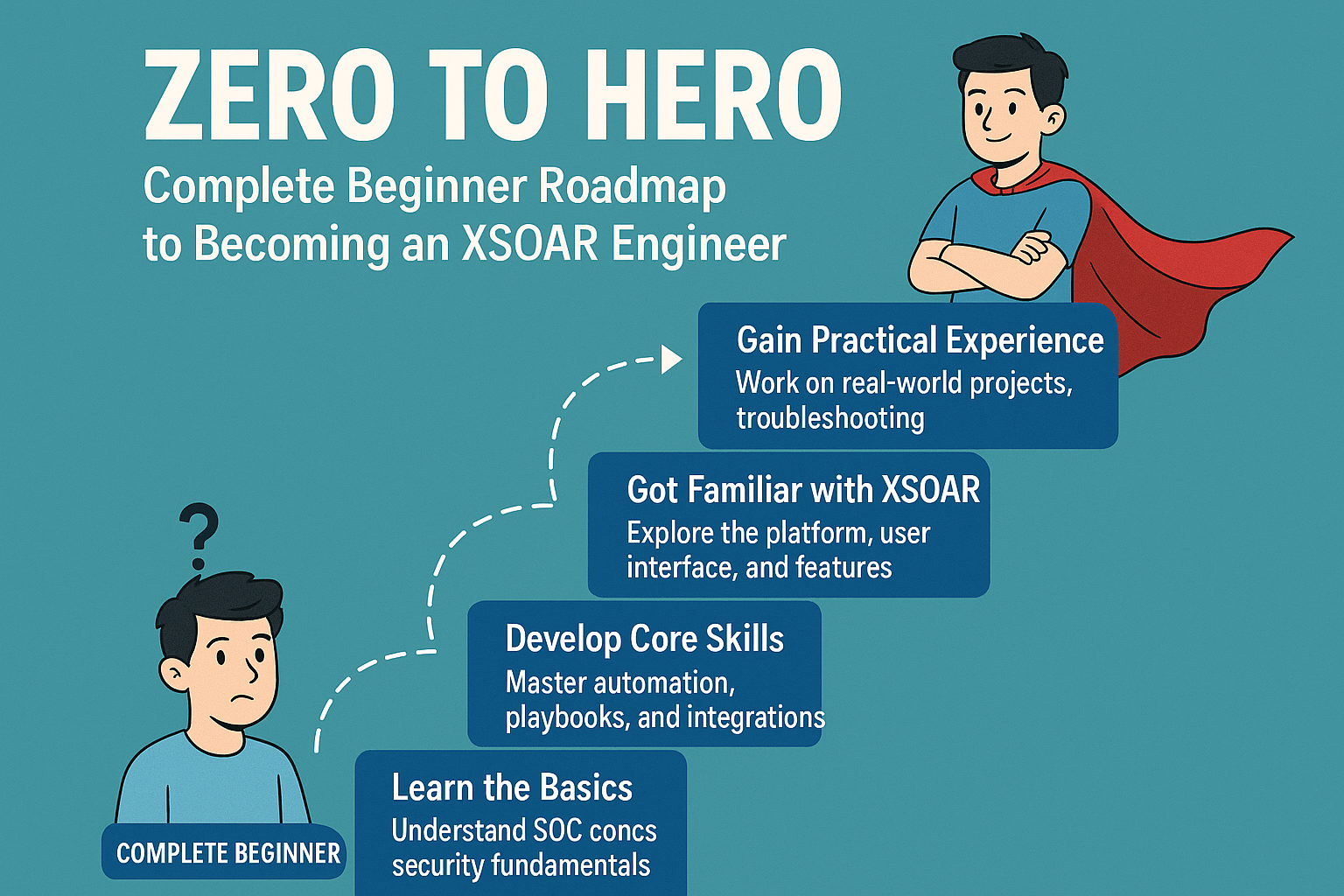
 A career in cybersecurity can feel overwhelming for beginners, but one role consistently stands out for those who want to combine automation, incident response, scripting, and SOC strategy: the XSOAR-Engineer. As organizations scale their security operations, the demand for professionals who can build, automate, and optimize Cortex XSOAR deployments continues to rise. If you want a future-ready role with strong career growth, global relevance, and skill-driven opportunities, the XSOAR Engineer path is one of the most rewarding places to start.
This guide breaks down everything you need to master, from technical skills and certifications to real-world projects and exam preparation. Whether you are new to cybersecurity or transitioning from a SOC role, this roadmap will help you confidently build your expertise and prepare for formal training or certification.
What Does an XSOAR-Engineer Do?
An XSOAR Engineer designs, deploys, and maintains security automation systems using Cortex XSOAR. This role focuses on reducing alert fatigue, streamlining SOC operations, and enabling automated workflows that allow teams to respond to threats faster.
Key responsibilities include:
-
Creating and customizing XSOAR playbooks for automated incident response
-
Integrating security tools such as SIEMs, EDRs, firewalls, cloud services, and threat intelligence platforms
-
Improving SOC workflows and reducing manual tasks
-
Troubleshooting automation issues
-
Building dashboards, layouts, and incident views
-
Ensuring alignment with organizational security objectives
The official resources from Palo Alto Networks highlight that XSOAR Engineers are expected to master threat response orchestration, automation features, and multi-platform integration. These details are available inside the XSOAR Engineer Datasheet published by Palo Alto Networks.
Why Start a Career as an XSOAR-Engineer?
Choosing this career path offers strong advantages:
1. High Demand
Security automation is rapidly becoming a standard in modern SOCs. Companies need engineers who can operationalize automation platforms and reduce response times.
2. Skill Diversity
You develop expertise in scripting, APIs, workflow design, cloud integrations, and SOC processes. This creates multiple long-term career paths such as Automation Architect, SOC Manager, and Threat Intelligence Engineer.
3. Career Acceleration
Cortex XSOAR is widely adopted globally. Demonstrating proficiency through hands-on projects and certifications helps beginners gain credibility faster.
4. Strong Learning Curve
This role combines technical skills with analytical thinking, making it ideal for people who want a blend of engineering and cybersecurity.
Step-by-Step Roadmap to Becoming an XSOAR-Engineer
Below is a complete learning journey that takes you from beginner to job-ready professional.
Step 1: Build Strong Cybersecurity Fundamentals
Before diving into automation, ensure you understand the core components of a SOC ecosystem.
Essential topics to master:
-
Types of cyberattacks and common security threats
-
SOC processes and incident response lifecycle
-
SIEM fundamentals
-
Basic understanding of networking
-
Endpoint protection concepts
-
Log analysis and alert triage
You do not need deep expertise at the beginning, but a functioning understanding of how alerts are generated and analyzed is crucial.
Step 2: Learn the Basics of Security Automation and SOAR
Security Orchestration, Automation, and Response (SOAR) is the foundation of the XSOAR-Engineer role.
Key concepts to explore:
-
What automation means in a SOC
-
How orchestration reduces manual work
-
Benefits of playbooks and unified response frameworks
-
Common use cases such as phishing triage, malware containment, and user investigation
Understanding these concepts helps you visualize how Cortex XSOAR fits into the broader cybersecurity landscape.
Step 3: Master Cortex XSOAR Fundamentals
Before attempting advanced integrations, focus on developing your foundation in the platform.
You should learn:
-
XSOAR interface, components, and architecture
-
Incident types, fields, and layouts
-
Basic playbook structures
-
Automations, scripts, and tasks
-
Dashboards and reports
-
Integration modules and configuration
Palo Alto Networks provides official guidance on these areas through the Palo Alto Networks XSOAR Engineer training materials, which outline the skills required for real-world deployments.
Step 4: Develop Technical Skills Needed for XSOAR Engineering
Successful XSOAR Engineers typically have competency across multiple technical domains.
1. Scripting Knowledge
Python is heavily used for automations in XSOAR. Learn how to:
-
Write scripts for incident tasks
-
Use APIs for integrations
-
Manipulate JSON data
-
Debug playbooks and custom scripts
2. Understanding APIs
XSOAR relies on API-based connectivity with security tools. Learn how REST APIs work, including:
-
Authentication
-
Calling APIs using Python
-
Parsing API responses
-
Troubleshooting integration errors
3. Data Formats
Become comfortable working with:
-
JSON
-
YAML
-
XML
These structures are essential for playbook customization and integration management.
4. Version Control Fundamentals
Use Git or similar tools to manage playbook and script changes.
Step 5: Build Hands-On XSOAR Experience Through Projects
Practical experience accelerates your learning. Create hands-on projects such as:
-
A phishing-analysis automation playbook
-
Malware enrichment workflow using VirusTotal and Threat Intelligence
-
Automated alert triage with scoring
-
Incident lifecycle management system
-
SIEM integration with automated response steps
These examples demonstrate your ability to design and optimize automation workflows, which employers value highly.
Step 6: Prepare for the XSOAR Engineer Certification
Certification validates your skills and builds credibility early in your career.
Refer to the official resources:
-
Palo Alto Networks XSOAR Engineer certification overview
-
XSOAR Engineer Datasheet (Skills, blueprint, training expectations)
Preparing with structured practice is essential. Candidates benefit significantly from practicing realistic scenarios before the exam. You can begin your exam preparation with the XSOAR Engineer Practice Test offered at NWExam.
This helps you identify weak areas, manage time effectively, and gain familiarity with exam-style questions.
Step 7: Gain Real-World SOC and Automation Exposure
Hands-on SOC exposure solidifies your training.
You can work on:
-
Real-time alert triage
-
Creating incident response workflows
-
Testing integrations with external tools
-
Enhancing automation efficiency
-
Working with threat intelligence feeds
This stage helps you understand real threats, escalations, and SOC workflows.
Step 8: Build a Strong Portfolio and Resume
To stand out for XSOAR-Engineer roles, create a portfolio showcasing:
-
Custom playbooks
-
Automation scripts
-
Integration workflows
-
Dashboards or reporting layouts
-
Documentation for each project
Employers prefer candidates who can demonstrate practical capability, not just theoretical understanding.
Step 9: Apply for XSOAR Engineer and SOAR-Focused Roles
Job titles that match your skillset include:
-
XSOAR-Engineer
-
SOAR Engineer
-
Security Automation Engineer
-
SOC Analyst with Automation Focus
-
Threat Response Automation Engineer
Beginners often start as SOC Analysts and transition toward automation-focused responsibilities as they grow.
Step 10: Continue Learning and Stay Updated
The security automation ecosystem evolves quickly. Make continuous learning part of your career growth by:
-
Reading Palo Alto Networks updates
-
Practicing advanced playbook scenarios
-
Learning new integrations for multi-cloud environments
-
Improving your Python proficiency
-
Staying updated with threat intelligence and response trends
Consistent learning ensures your skills remain relevant and competitive.
Skills You Need to Become a Successful XSOAR-Engineer
Below is a consolidated list of essential skills:
1. Technical Skills
-
Python scripting
-
API integrations
-
XSOAR playbook creation
-
JSON and YAML handling
-
SIEM and EDR platform knowledge
-
Cloud security fundamentals
2. Soft Skills
-
Analytical thinking
-
Documentation skills
-
Problem-solving
-
Decision-making under pressure
-
Cross-team communication
How XSOAR Engineer Practice Exams Improve Your Success Rate
Many candidates struggle not because they lack knowledge, but because they are unfamiliar with exam patterns or real-time scenarios. Practice exams simulate real certification conditions, providing three major benefits:
-
Confidence building: You understand the complexity and structure of questions.
-
Time management: You learn to solve scenario-driven questions under time constraints.
-
Gap identification: You discover weak topics early and strengthen them.
Conclusion: Your XSOAR-Engineer Journey Starts Now
Becoming an XSOAR-Engineer is an achievable goal for beginners willing to follow the right roadmap. By mastering cybersecurity fundamentals, learning automation principles, gaining hands-on Cortex XSOAR experience, and preparing with practice exams, you position yourself for a rewarding, high-impact career in cybersecurity.
With the increasing demand for automation and orchestration skills, now is the perfect time to begin your journey. Use the official Palo Alto Networks resources and trusted practice tools to elevate your expertise and accelerate your cybersecurity career.