Certification preparation often feels overwhelming before it even begins. The NSE4_FGT_AD-7.6 exam is no exception. Candidates frequently struggle not because the material is impossible, but because they lack a clear study roadmap. FortiGate 7.6 introduces real-world firewall administration concepts that demand structured learning, consistent practice, and hands-on exposure.
This guide provides a step-by-step NSE4_FGT_AD-7.6 study roadmap designed for beginners and working professionals alike. You will learn how to move logically through FortiGate 7.6 topics, avoid common preparation mistakes, and use practice exams intelligently to pass the NSE4 FortiGate Administrator exam with confidence.
What Is the NSE4_FGT_AD-7.6 Certification?
The NSE4_FGT_AD-7.6 certification validates your ability to configure, manage, and troubleshoot FortiGate firewalls running FortiOS 7.6. It sits at the core of Fortinet’s Secure Networking track and is widely recognized by enterprises deploying FortiGate as their primary perimeter or internal firewall.
According to Fortinet’s official certification guidance, NSE 4 professionals are expected to demonstrate skills across firewall policies, NAT, VPNs, authentication, security profiles, routing, and logging. The exam focuses on practical administration, not theoretical security concepts.
Official exam references:
Who Should Follow This Study Roadmap?
This NSE4_FGT_AD-7.6 study roadmap is ideal for:
-
Network administrators working with FortiGate firewalls
-
Security engineers transitioning into firewall administration
-
SOC professionals expanding into perimeter security roles
-
IT professionals pursuing FortiGate firewall certification for career growth
-
Beginners preparing for their first Fortinet certification
No prior NSE certification is mandatory, but basic networking knowledge significantly improves learning speed.
NSE4_FGT_AD-7.6 Exam Structure Overview
| Exam Name | Fortinet NSE 4 - FortiOS 7.6 Administrator |
| Exam Number | NSE4_FGT_AD-7.6 FortiOS Administrator |
| Exam Price | $200 USD |
| Duration | 90 minutes |
| Number of Questions | 50-55 |
| Passing Score | Pass / Fail |
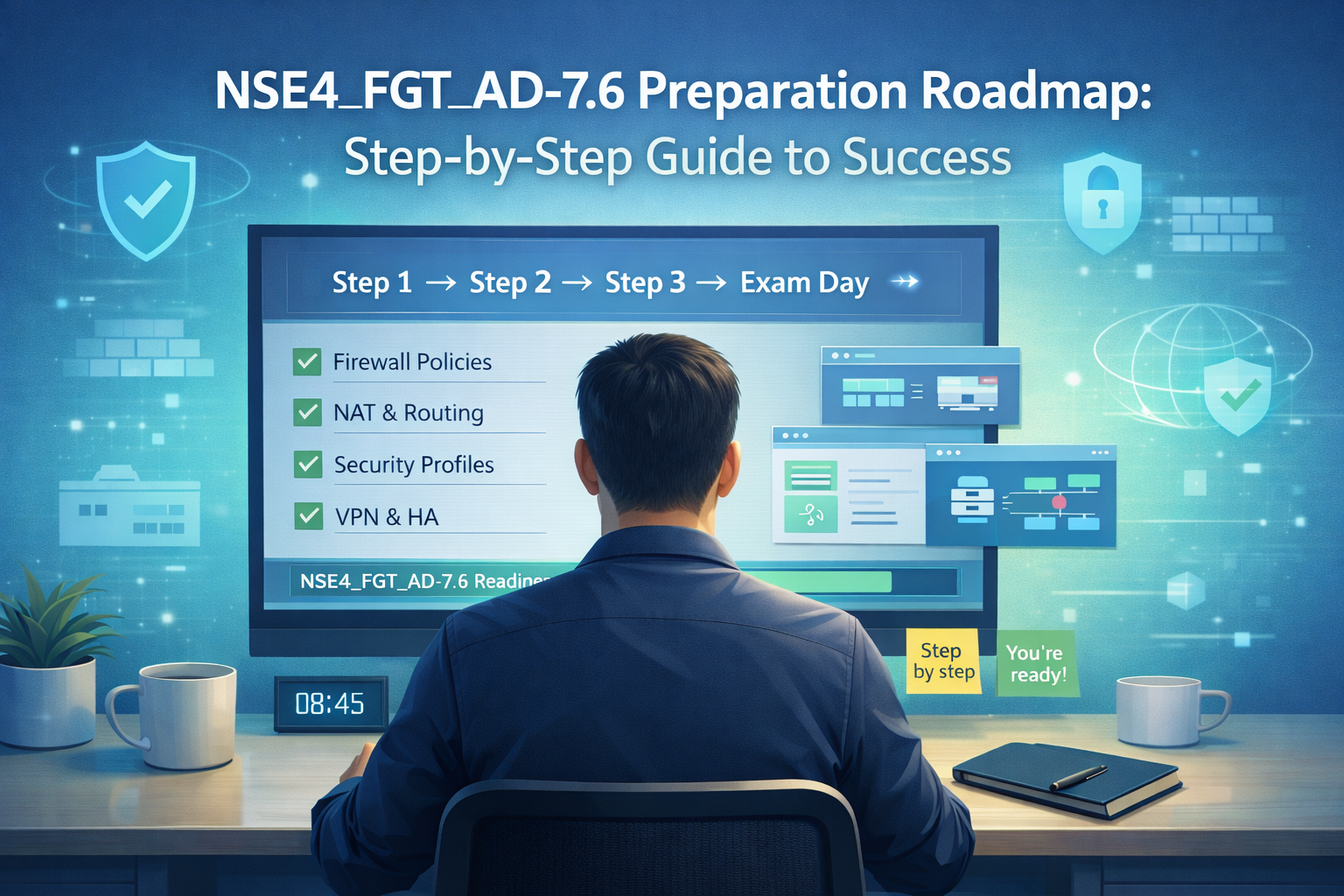
Step-by-Step NSE4_FGT_AD-7.6 Study Roadmap
Step 1: Build Strong FortiGate Fundamentals
Your preparation should begin with FortiGate fundamentals, not security profiles or VPNs.
Focus first on:
-
FortiGate architecture and interfaces
-
FortiOS 7.6 GUI and CLI navigation
-
Device roles, zones, and policies
-
Configuration backup and restore
This stage creates the foundation required for every advanced topic. Candidates who rush past fundamentals often struggle later with troubleshooting questions.
Step 2: Master Firewall Policies and NAT
Firewall policies are the heart of the NSE4_FGT_AD-7.6 exam.
Key areas to master:
-
Policy matching logic (top-down processing)
-
Address objects and services
-
Source and destination NAT
-
Central NAT vs policy-based NAT
-
Policy troubleshooting using logs
Spend time understanding why traffic is allowed or denied, not just how to create policies. This understanding is frequently tested in scenario-based questions.
Step 3: Learn Authentication and User Controls
FortiGate authentication concepts are critical and often underestimated.
Study topics include:
-
Local users and user groups
-
Firewall authentication policies
-
Integration with external authentication servers
-
Role-based access control
-
Administrative profiles
These topics are closely tied to real-world enterprise deployments and are a recurring focus in Fortinet NSE4 exam topics.
Step 4: Deep Dive into Security Profiles
Security profiles distinguish FortiGate from traditional firewalls.
You should clearly understand:
-
Antivirus, IPS, and application control
-
Web filtering and DNS filtering
-
SSL inspection modes
-
Security profile order of operations
Do not memorize features blindly. Instead, focus on when and why a security profile blocks traffic. This approach aligns directly with how exam questions are framed.
Step 5: VPN Configuration and Remote Access
VPNs are a high-value domain in the NSE4_FGT_AD-7.6 exam.
Core areas to cover:
-
Site-to-site IPsec VPNs
-
Phase 1 and Phase 2 parameters
-
SSL VPN architecture
-
User authentication for VPNs
-
VPN troubleshooting tools
Hands-on practice is especially important here, as configuration errors are common and heavily tested.
Step 6: Routing, SD-WAN, and Traffic Flow
FortiGate is not just a firewall; it is a routing device.
Focus on:
-
Static and dynamic routing concepts
-
Policy routes vs routing table
-
Basic SD-WAN configuration
-
Path selection and failover behavior
Understanding traffic flow across routing and firewall policies will help you answer complex scenario-based questions with confidence.
Step 7: Logging, Monitoring, and Diagnostics
Many candidates ignore monitoring topics until the last minute, which is a costly mistake.
Study:
-
Traffic logs and event logs
-
Forward traffic logs vs local traffic logs
-
FortiGate diagnostic commands
-
Packet flow and debug flow
Troubleshooting questions often combine multiple topics, making this section essential for exam success.
Official Training vs Practice Exams: What Works Best?
Official Fortinet training provides accurate conceptual knowledge and aligns closely with exam objectives. However, many candidates fail because they do not validate their readiness before the exam.
This is where practice exams and mock tests become essential.
Practice exams help you:
-
Identify weak areas early
-
Improve time management
-
Get familiar with question phrasing
-
Reduce exam anxiety
A structured practice approach using NSE4_FGT_AD-7.6 practice questions allows candidates to transition from learning mode to exam-ready mode effectively.
For candidates looking to reinforce their preparation through structured online practice, this practice exam platform provides timed simulations and exam-focused question sets aligned with real test patterns.
Using practice exams after completing each major topic dramatically improves retention and confidence.
Common NSE4_FGT_AD-7.6 Preparation Mistakes to Avoid
Many exam failures stem from predictable mistakes:
-
Studying topics out of order
-
Skipping hands-on configuration
-
Memorizing answers instead of understanding logic
-
Ignoring logs and troubleshooting sections
-
Taking practice exams too early
Following a structured FortiGate 7.6 study plan prevents these pitfalls and ensures balanced preparation.
How Long Does It Take to Prepare for NSE4_FGT_AD-7.6?
Preparation time depends on experience:
-
Beginners: 6–8 weeks with consistent daily study
-
Network professionals: 4–6 weeks
-
Experienced FortiGate admins: 2–3 weeks with focused revision
The key factor is not duration but study structure and practice quality.
Final Exam-Day Preparation Tips
Before exam day:
-
Review weak areas identified in mock tests
-
Revisit VPNs and security profiles
-
Practice interpreting logs quickly
-
Avoid learning new topics in the final 48 hours
Confidence comes from repetition, not last-minute cramming.
Why NSE4_FGT_AD-7.6 Is Worth the Effort
The NSE4 FortiGate Administrator exam opens doors to roles such as network security engineer, firewall administrator, and SOC analyst. As Fortinet adoption continues to grow globally, FortiGate certification remains a strong career investment.
With a structured roadmap, hands-on practice, and targeted mock exams, passing NSE4_FGT_AD-7.6 becomes a realistic and achievable goal.
Final Thoughts
Passing the NSE4_FGT_AD-7.6 exam is not about studying harder; it is about studying smarter. A clear roadmap, aligned resources, hands-on practice, and realistic mock exams form the foundation of success.
Follow this study plan step by step, avoid common mistakes, and use practice exams strategically. With the right approach, mastering FortiGate 7.6 becomes a confident, structured journey rather than a stressful race.